


Engineering the technologies that transform the world
Digital Technologies Engineering is a multidisciplinary Bachelor’s Degree designed to prepare the next generation of digital engineers. The programme combines computer science, electronics, telecommunications, automation, artificial intelligence, robotics, and bioengineering to equip students with the skills needed to design and develop intelligent systems for industry, services, and society. With a strong international dimension and close collaboration with industry, the course offers both hands-on professional experience and a solid foundation for advanced studies.

An International Dimension

The degree programme is delivered in a mixed-language format (Italian and English). Most courses are taught in English, reflecting the interdisciplinary and international nature of the programme and preparing students for a global professional environment. Two courses are offered in Italian.
To support students in their academic journey, the University of Pisa’s Interdepartmental Language Centre (CLI) provides dedicated Italian and English language courses, ensuring that all students can confidently engage with the programme and succeed in an international learning context.
Design Your Own Career Path
In the first two years, the programme includes foundational courses in mathematics, physics, and computer science, providing students with a strong scientific and methodological background. At the same time, starting from the very first year, students will also take core discipline-specific courses, ensuring an early and progressive immersion into the key areas of Digital Technologies Engineering.
In your third year, choose the direction that fits your ambitions:
- a professional internship track (18 ECTS) to enter the job market with practical experience, or
- an academic track to continue with a Master’s Degree in engineering and advanced technologies.
Your degree, your future, your choice.

STUDY PLAN
First Year (60 CFU)
- MATHEMATICAL ANALYSIS I (9 CFU)
- GENERAL PHYSICS (12 CFU)
- FUNDAMENTALS OF PROGRAMMING (6 CFU)
- INTERNET TECHNOLOGIES (6 CFU)
- LINEAR ALGEBRA AND MATHEMATICAL ANALYSIS II (12 CFU)
- FUNDAMENTALS OF INDUSTRIAL MANAGEMENT AND ECONOMICS (6 CFU)
- ELECTROMAGNETICS FOR INFORMATION ENGINEERING (6 CFU)
- TECHNICAL AND COMMERCIAL ENGLISH (3 CFU)

Second Year (60 CFU)
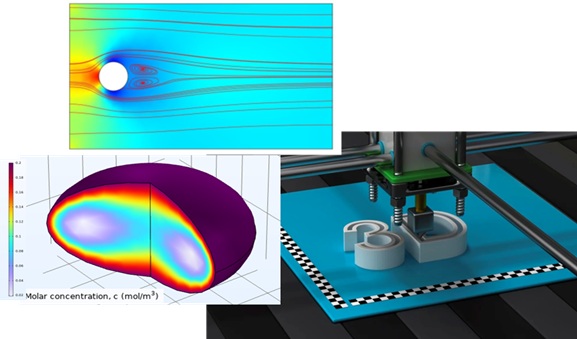
- COMPUTING SYSTEMS AND DISTRIBUTED PROGRAMMING(12 CFU)
- ANALOG AND DIGITAL ELECTRONICS
- DIGITAL ELECTRONICS (6 CFU)
- ANALOG ELECTRONICS (6 CFU)
- ADDITIVE MANUFACTURING(6 CFU)
- FUNDAMENTALS OF BIOENGINEERING(9 CFU)
- MICROWAVE DEVICES AND WIRELESS CIRCUITS(6 CFU)
- SIGNAL PROCESSING(6 CFU)
- AUTOMATIC CONTROLS(9 CFU)
Third Year (60 CFU)
- INDUSTRIAL ELECTRONICS
- ELECTRONIC SYSTEMS FOR ROBOTICS & ENERGY MANAGEMENT (6 CFU)
- LABORATORY OF ELECTRONIC MEASUREMENTS AND IOT SYSTEMS (6 CFU)
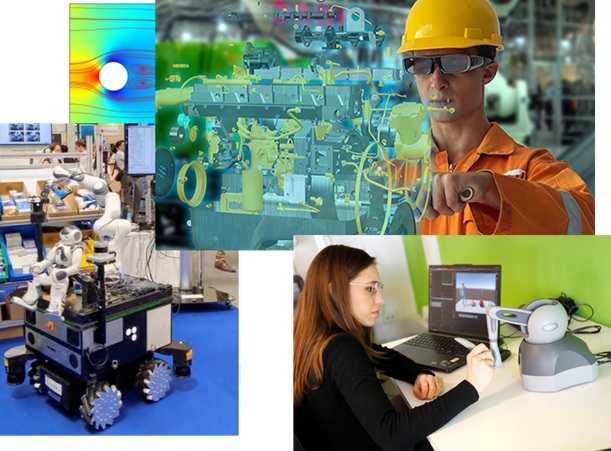
- ROBOTICS: PRINCIPLES AND APPLICATIONS(9 CFU)
- COMMUNICATION SYSTEMS AND SENSING(9 CFU)
- FUNDAMENTALS OF ARTIFICIAL INTELLIGENCE(6 CFU)
- AUGMENTED, MIXED AND VIRTUAL REALITY SYSTEMS(6 CFU)
The Bachelor’s Degree Programme in Digital Technologies Engineering has open admission.
However, to assess your initial preparation, you must take an assessment test (TOLC-I) and achieve a minimum score in order to sit exams.
The test can also be taken after enrolment. Go to the information about the assessment test.